Application · QB AutoSampler
Modular automated sampling for bioprocess R&D
Software-defined sampling from your vessel to a cooled vial: automated draw, configurable path cleaning, in-vial dilution, split aliquoting and 4 °C sample storage. One QB Edge, one QB Control, and modules you add as your lab grows.
From €15,000 — perpetual licence
Starting price; the final price depends on configuration and consumables.
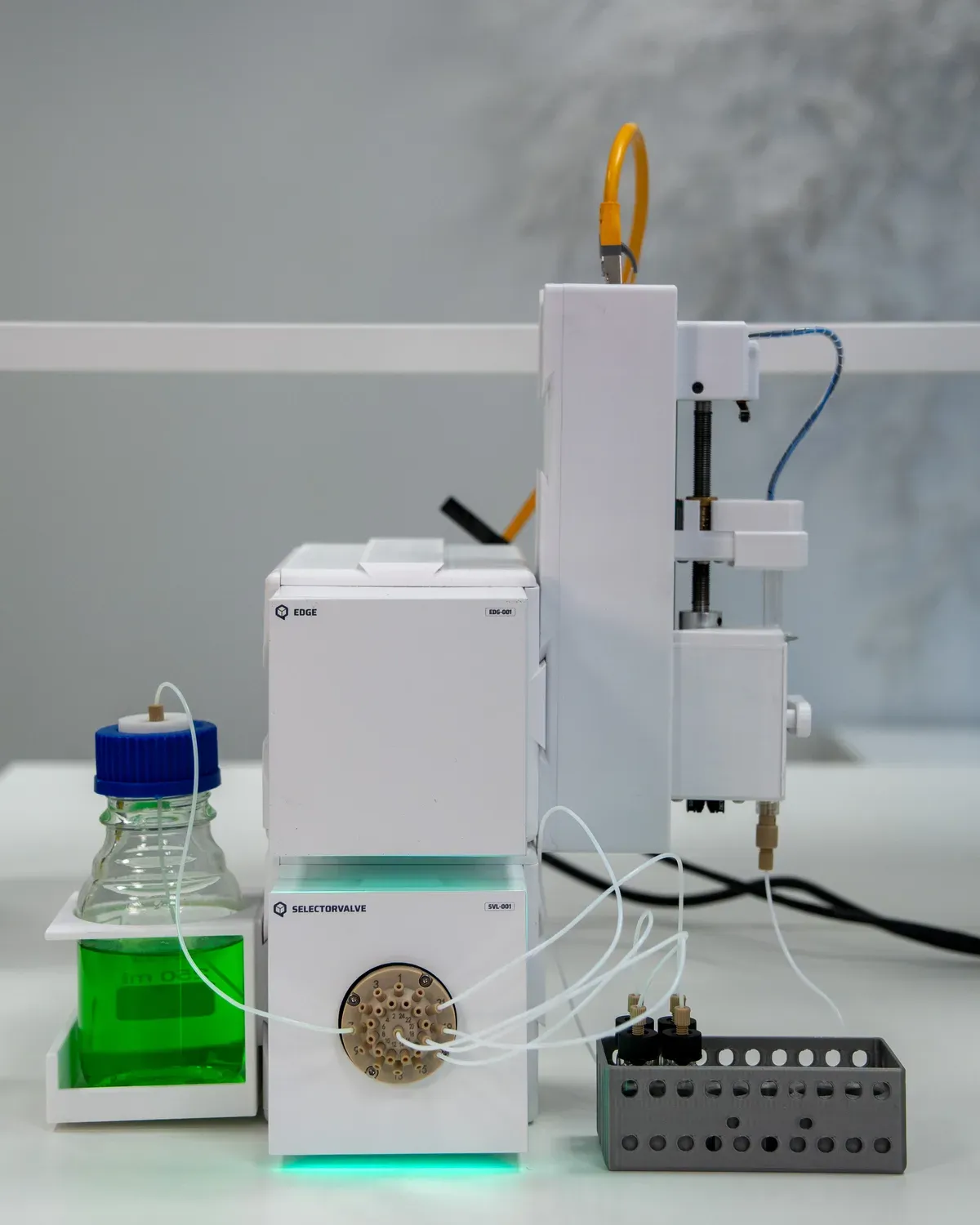
- valve positions per Selector Valve, stackable
- 24
- valve positions per Selector Valve, stackable
- syringe pump accuracy, of set volume
- ±0.5 %
- syringe pump accuracy, of set volume
- cooled sample storage for more than 72 h
- 4 °C
- cooled sample storage for more than 72 h
- dilution factor in the vial
- 1.0–6.0
- dilution factor in the vial
How it works
From your vessel to a cooled vial in four steps
Every sample takes the same route: the Selector Valve picks the port, the Syringe Pump moves the liquid, and QB Control runs the sequence as a recipe step.
- Select a step to follow the liquid.
Why sampling needs to change
Manual sampling limits what you can run in parallel
Manual sampling introduces variability and limits what a process-development lab can run in parallel. Fixed-port systems force trade-offs.
-
Manual errors
Human sampling introduces variability, contamination risk and inconsistent volumes across batches.
-
Limited scalability
Fixed-port systems cannot grow with your process. Adding vessels means buying entirely new hardware, not adding modules.
-
Cross-contamination risk
Shared fluid paths without proper cleaning protocols compromise sample integrity and data quality across parallel experiments.
-
Sample degradation
Samples left at ambient temperature between draw and analysis lose analytical value.
Capabilities
Six core capabilities
What the system does today, built from QB Modules and QB Control services.
- 01
Scales by modules
Up to 24 positions per Selector Valve, and valves are stackable. Add Syringe Pump and Selector Valve pairs as you add vessels, all on one QB Edge (more with QB Switch).
- 02
Configurable fluid paths
Dedicated, shared or hybrid paths to match your contamination strategy, switched per cycle by the recipe.
- 03
Sample preparation in the path
In-vial dilution (factor 1.0–6.0) and one draw split between two destination ports, using ports of the same valve.
- 04
Configurable path cleaning
Wash ×N, rinse ×N and air-dry ×1 before and/or after each sample, with an optional fill. A separate service washes selected valve ports.
- 05
Recipe-driven adaptive sampling
Triggers built in the Recipe Designer from Wait Until, Conditional, Timer, Counter and Variable blocks on live device tags — or from a third-party system over OPC UA.
- 06
Cooled sample storage
The QB Sample Cooling Chamber with a QB Thermo chiller loop keeps samples at 4 °C for more than 72 hours (1 °C minimum reached in laboratory conditions).
Hardware
Build your sampler from QB Modules
Every module is powered and connected over one PoE Ethernet cable, auto-discovered by QB Edge and run from the QB Control web interface.
-
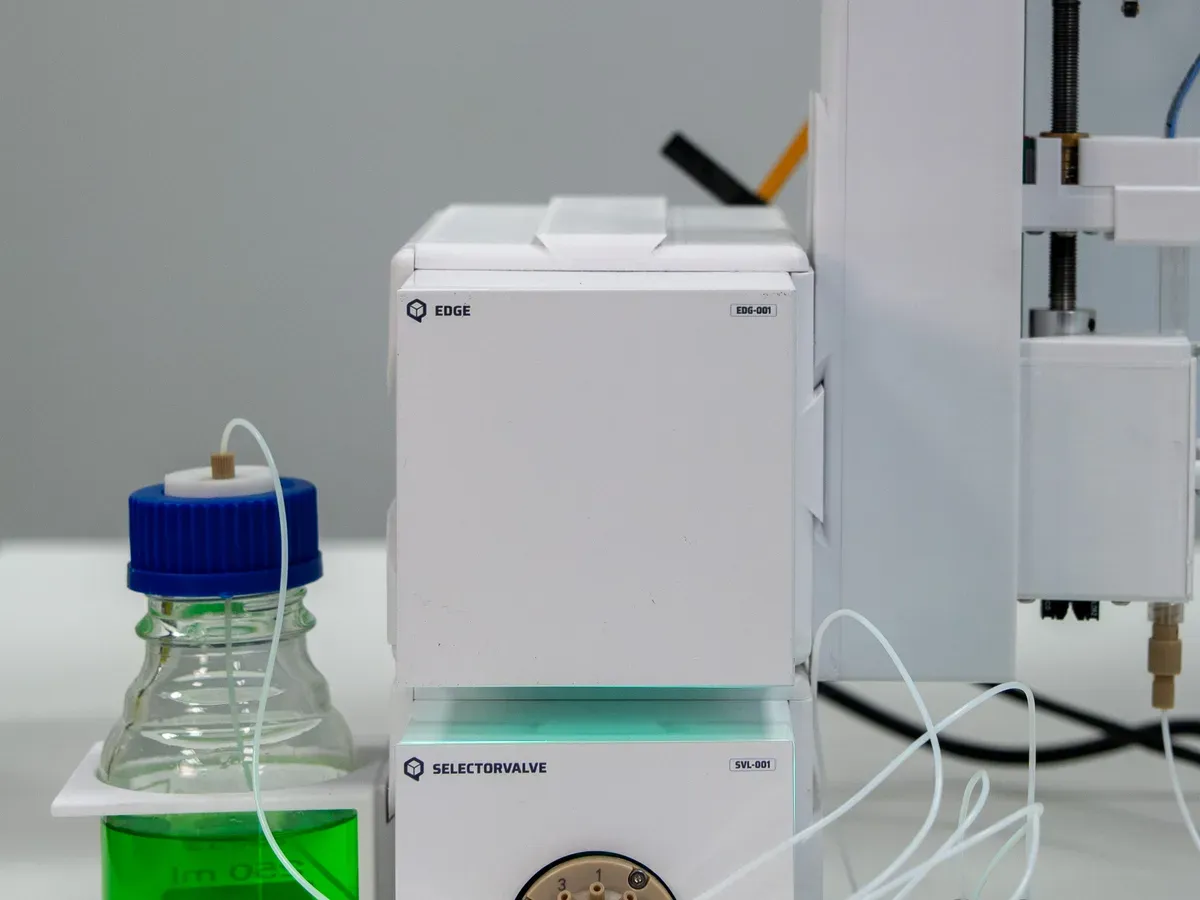 Core EDG-001
QB Edge
- Central controller, hosts QB Control
- Powers and connects up to 7 QB Modules (more via QB Switch)
- Ethernet, WireGuard VPN; Wi-Fi and LTE optional
- OPC UA connector in QB Control
-
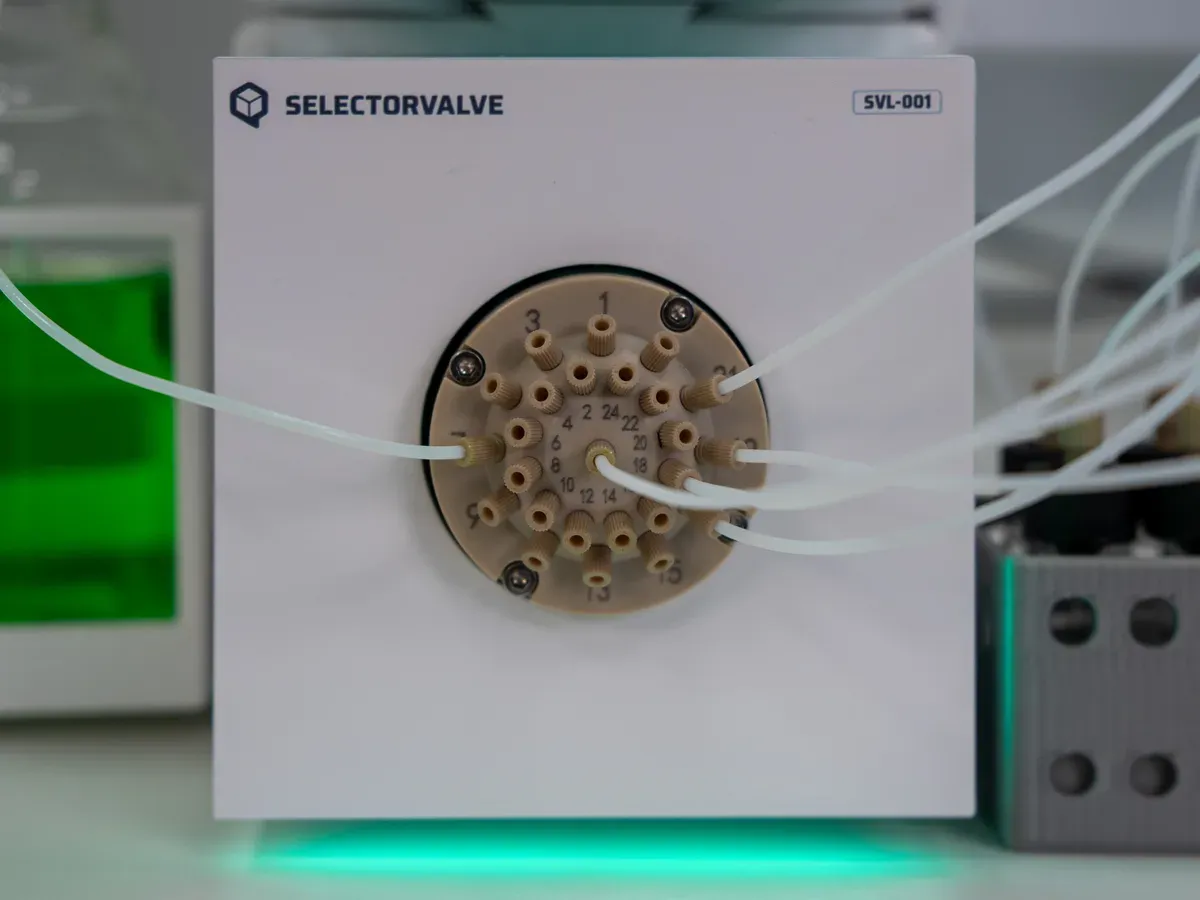 Core SVL-001
QB Selector Valve
- Electrical valve, up to 24 positions
- Routes source, wash, air, waste and destination ports
- Tubing OD 1.6 mm; stackable
- One cable for power and data
-
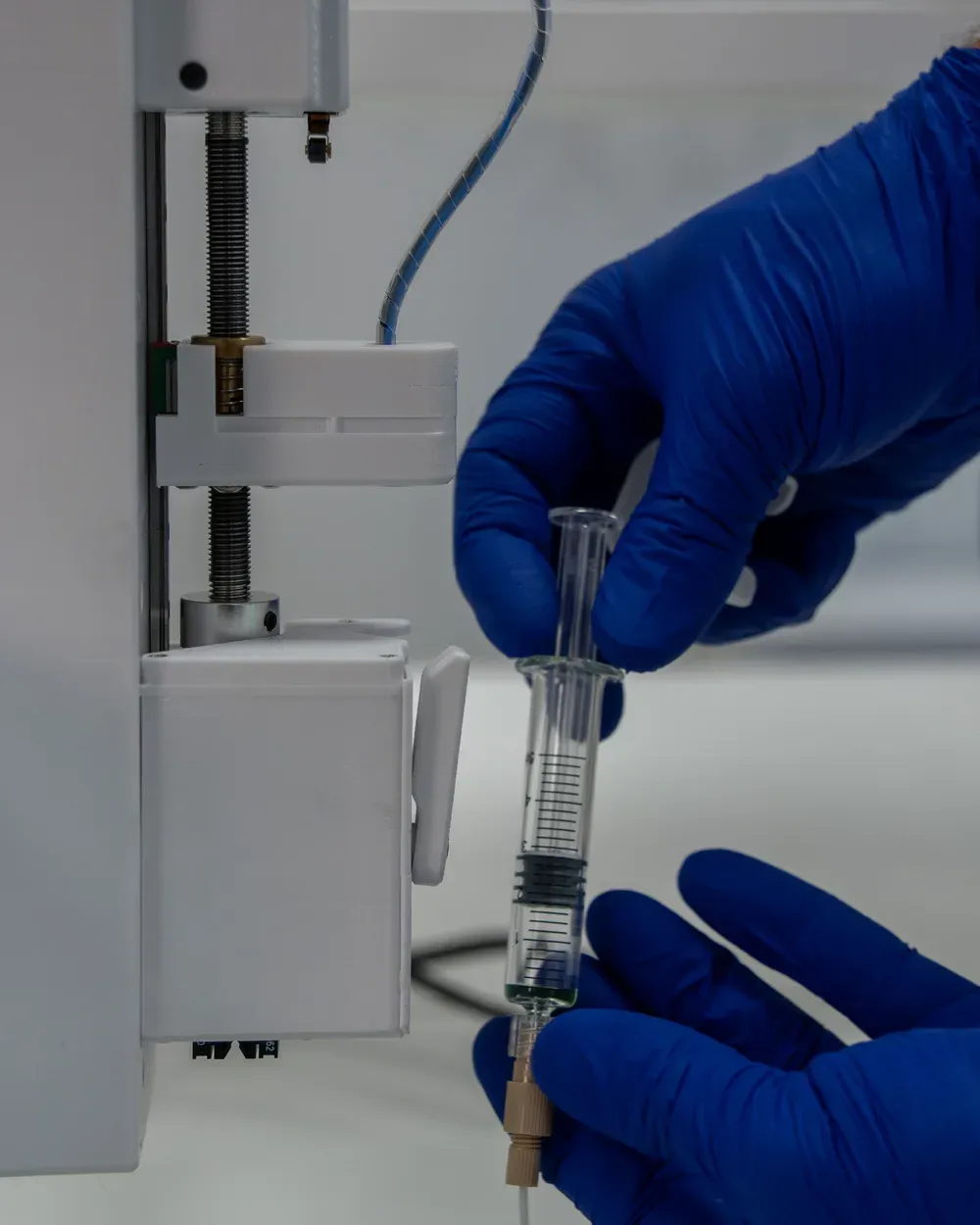
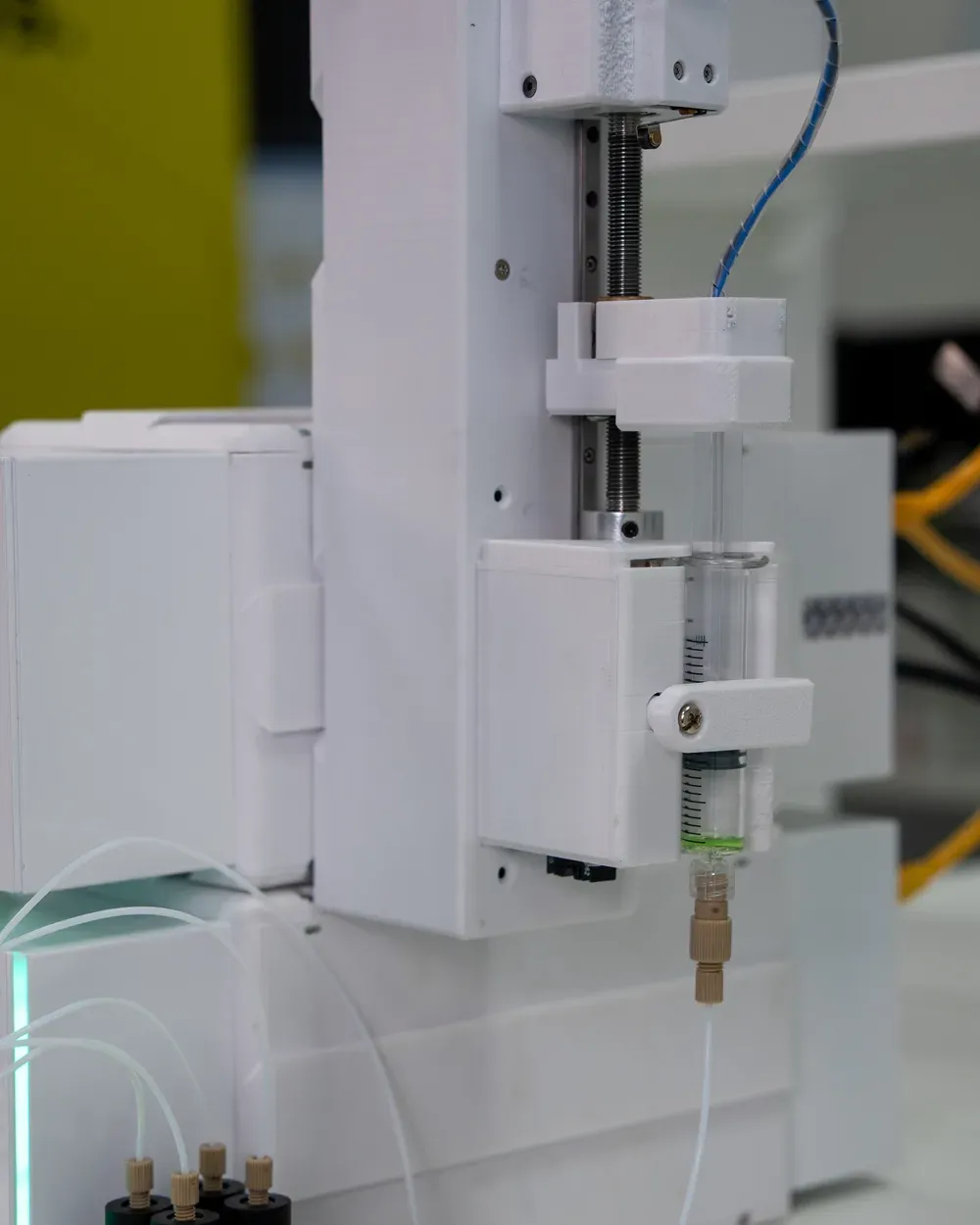 Core SPM-002
QB Syringe Pump
- 5 mL or 10 mL single-use syringes
- 0.001–50 mL/min, depending on syringe size
- ±0.5 % of set volume (final accuracy depends on the syringe)
- Calibrate after every syringe change and after maintenance
-
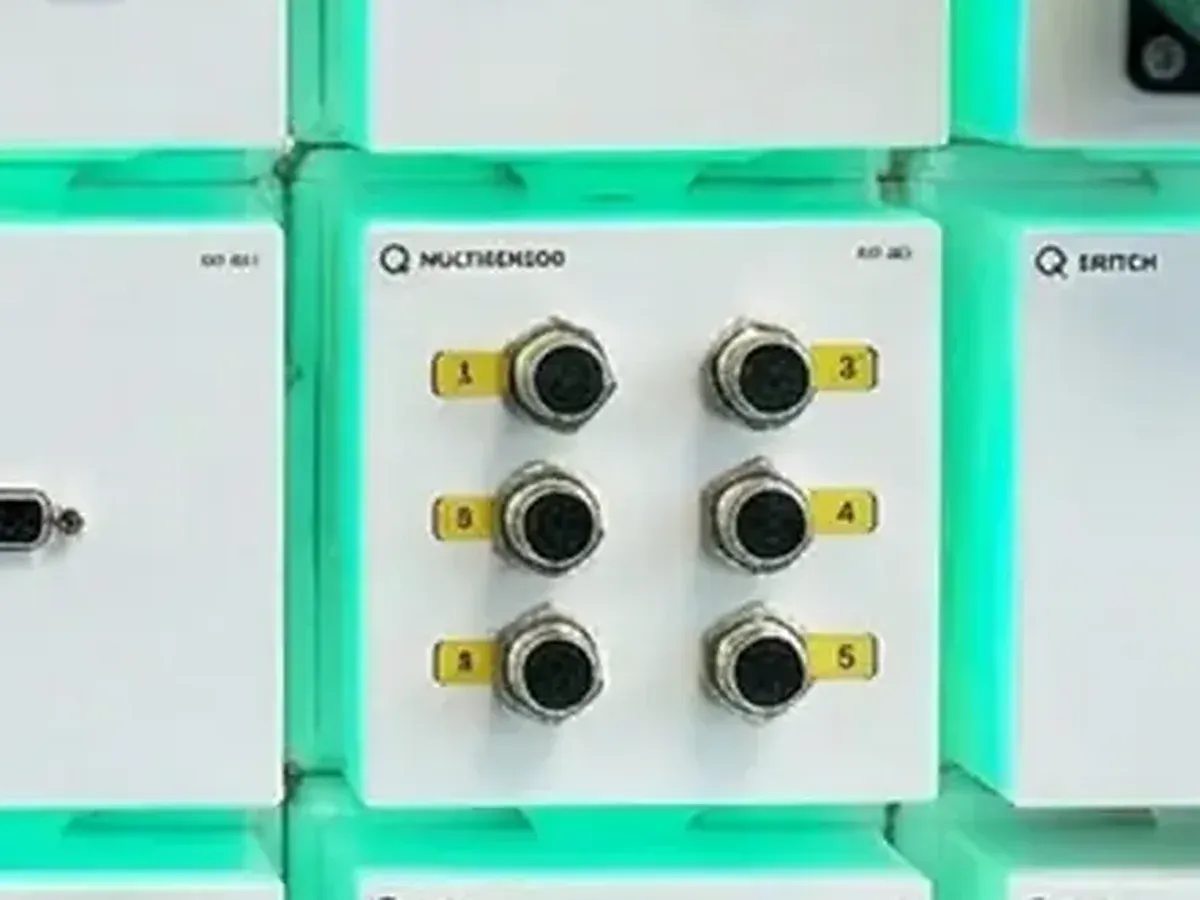 For cooled storage MTS-001
QB Multisensor
- Data acquisition for up to 6 sensors
- Reads the chamber temperature from a Pt100 (with converter)
- Feeds the Temperature Control by TCU service
-
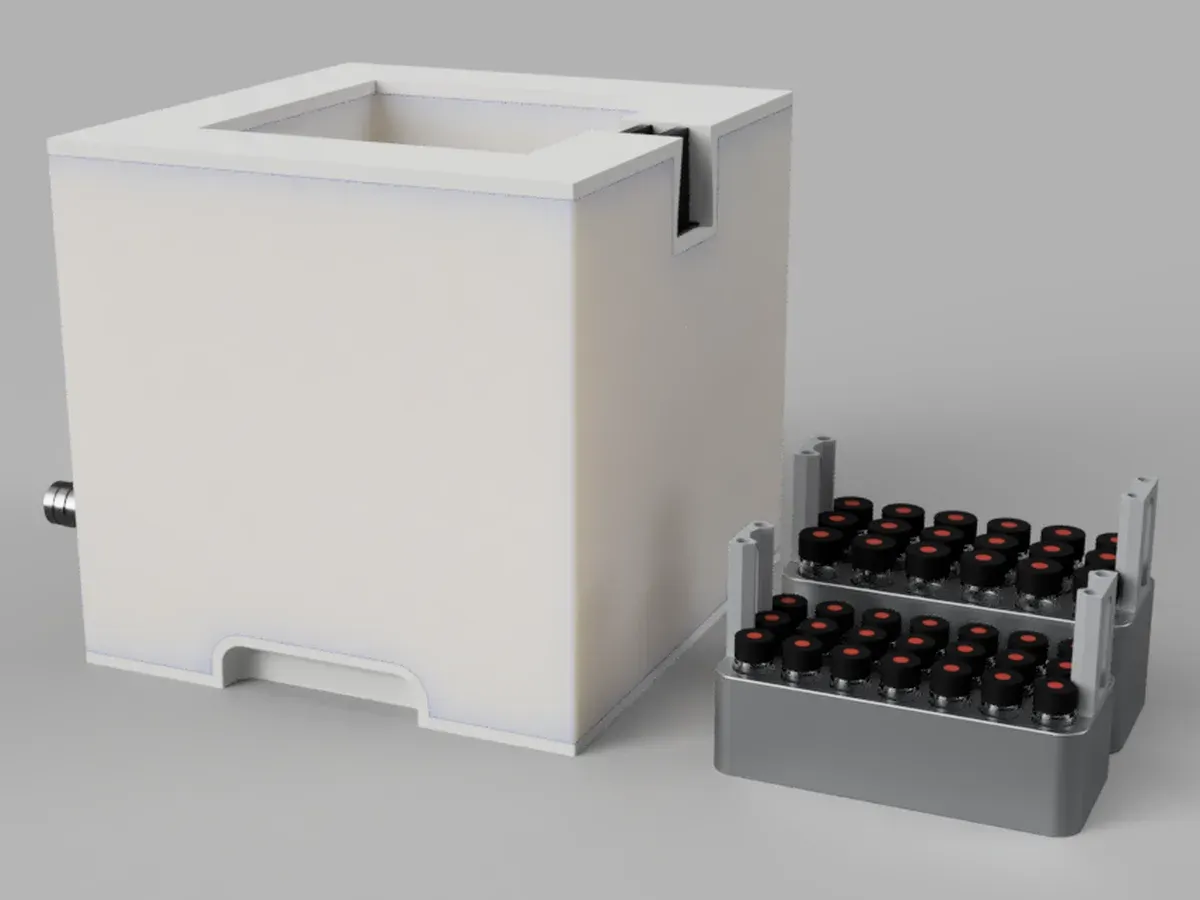 For cooled storage SCM-001
QB Sample Cooling Chamber
- Insulated chamber with cooled, exchangeable vial holders
- 42 × 4 mL, 36 × 8 mL or 21 + 18 mixed vials
- Tubing pass-throughs, coolant quick connectors
- Needs an external chiller loop
-
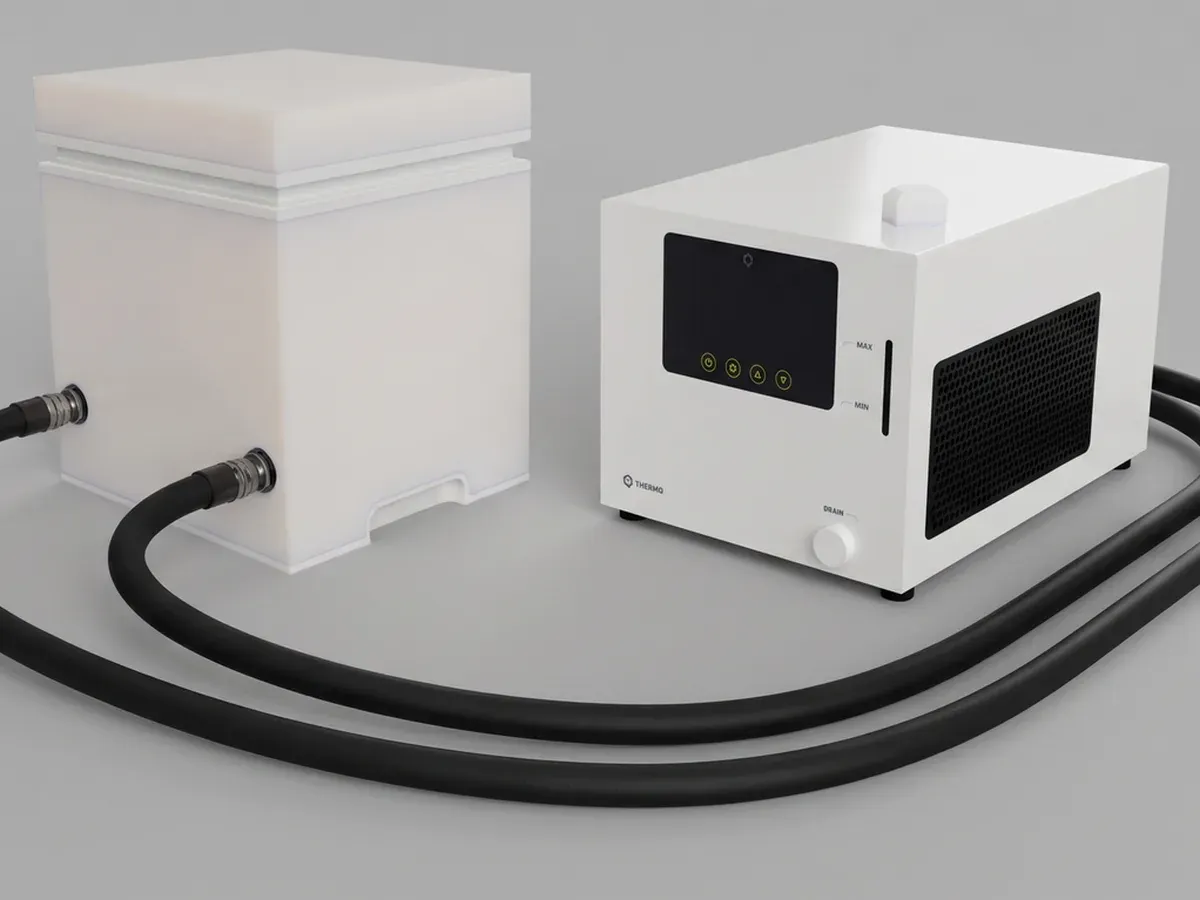 For cooled storage TCT-001
QB Thermo
- Heating and cooling device, 2–42 °C
- Cooling power 580 W, heating 460 W
- Self-sealing quick-connect thermofluid fittings
- The chiller for the cooling chamber loop
Fluid paths
Your contamination strategy, configured in software
Dedicated, shared and hybrid paths run on the same platform; you choose per source group.
Dedicated
One Syringe Pump and Selector Valve pair per source vessel. No shared fluid path between vessels.
Typical use: Contamination-sensitive work
Shared
One device pair, several sources. The recipe switches sources and destinations per cycle, so the cleaning strategy becomes critical.
Typical use: Screening · DoE
Hybrid
Dedicated and shared paths combined in one system, per source group.
Typical use: Phased experiments
Services
Five services, one platform
Sampling logic runs as QB Control services, configured per recipe step. Every service validates its configuration before any liquid moves, supervises both devices and every step, and reports precisely why it stopped.
- Available
Automated Sampling
Core service
- Takes a defined volume from a vessel through the Selector Valve and dispenses it into a tube or vial.
- Empty to waste, optional priming, optional clean before, draw, dispense, optional clean after, optional fill.
- Resume repeats the interrupted step; a partly drawn volume is completed, not drawn twice.
- Available
Sampler Cleaning
Port washing
- Washes selected Selector Valve ports with one washing liquid, port by port.
- Per-port switches for ports 1–24; the washing source port is excluded automatically.
- Always one full syringe per port.
- Available
Sampling Aliquoting
One draw, two ports
- Draws X = Y + Z and pushes Y to port A, the remainder Z to port B.
- Compensates the dead volume of both destination lines; a deviation above 0.05 mL or 2 % raises a warning.
- Delivery is sequential within one cycle, not simultaneous.
- Available
Sampling Dilution
In-vial dilution
- Dilution factor D = total ÷ sample, 1.0–6.0; sample first, then diluent, then an air chase.
- Interleaved dosing in up to 10 portions; a vial capacity check stops the run before any liquid moves.
- The service does not mix: vortex the vials before analysis.
- Available
Temperature Control by TCU
Cooled storage
- Cascade control: an external sensor measures the process, and the service's PID sets the chiller setpoint.
- Optional process limits, six-level temperature alarms, chiller and sensor supervision.
- In the sampler it holds the cooling chamber at its storage temperature through QB Thermo.
Path cleaning
Wash, rinse, dry — before and after every sample
Cleaning runs through the Syringe Pump and Selector Valve. Each leg is switched on or off separately, before the sample, after it, or both.
- 1
Wash ×N
Fill the syringe from the washing port and empty it to waste, 1–24 times.
- 2
Rinse ×N
The same with the rinsing liquid port, 1–24 times.
- 3
Air-dry ×1
Fill the syringe with air and push it to waste at the drying flow rate.
- 4
Fill (optional)
Fill the syringe with a filling liquid; it keeps the path wet between samples.
Washing, rinsing and filling liquids and the air connect to ports of the same Selector Valve. You choose the liquids and your cleaning strategy.
Run Sampler Cleaning together with Automated Sampling, before and after sampling, so tubing and valve ports stay clean and unclogged.
Aseptic sampling setup
Dedicated consumable sets, an A4BEE-provided SOP for assembly and operation, and an aseptic testing report available on demand. The same hardware supports standard and aseptic sampling.
Cooled storage
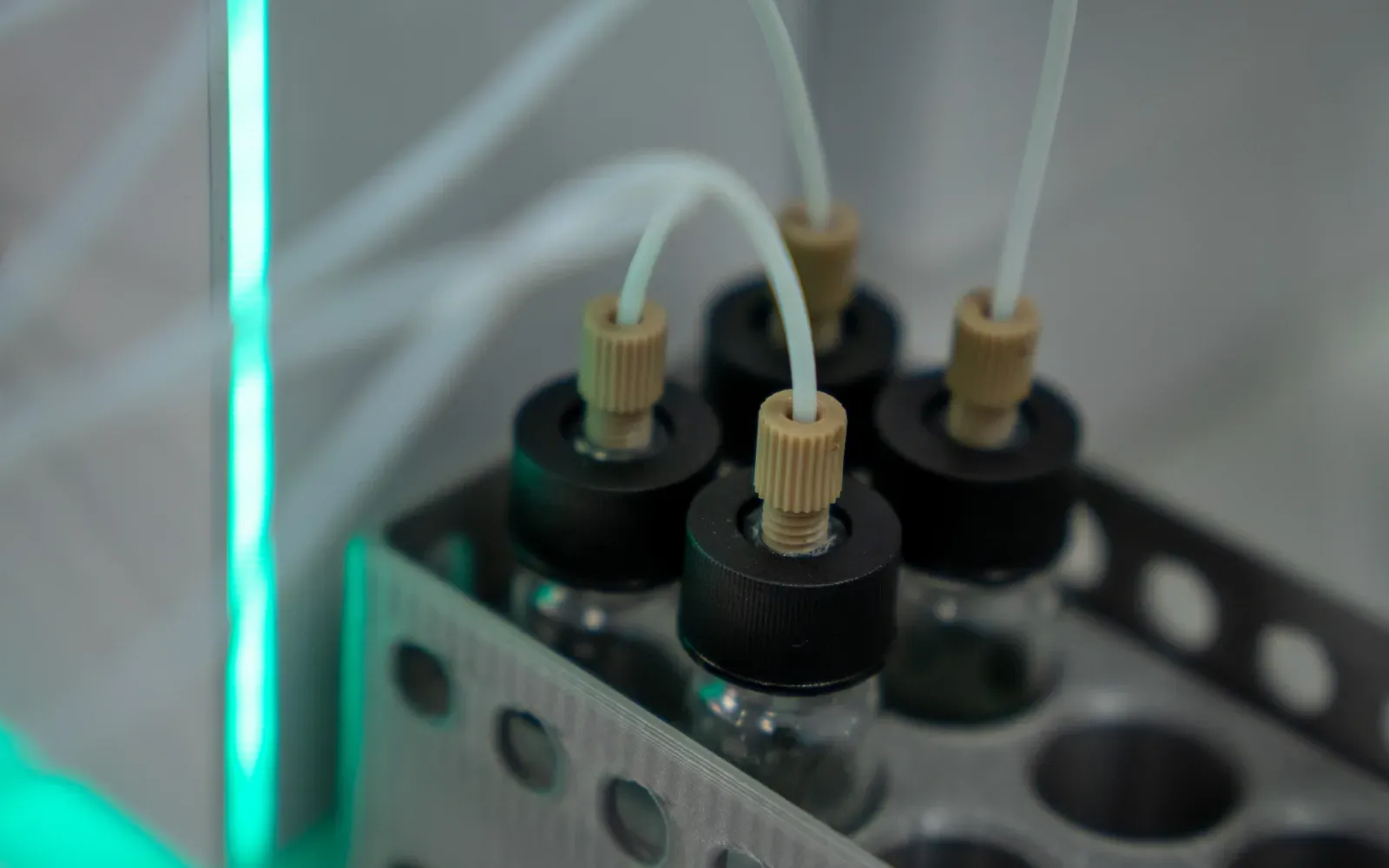
4 °C storage right next to the process
The QB Sample Cooling Chamber keeps drawn samples in an insulated, cooled holder until collection. It needs an external chiller loop; final performance depends on chiller settings, coolant, tubing and ambient conditions.
- 1
QB Thermo (TCT-001)
Circulates glycol-based coolant to the chamber through self-sealing quick connectors (2–42 °C).
- 2
QB Sample Cooling Chamber (SCM-001)
Holds the vial rack in an insulated cooled volume; sample lines enter through pass-throughs without disconnecting.
- 3
QB Multisensor (MTS-001)
Reads the chamber temperature from a Pt100 sensor (with converter).
- 4
Temperature Control by TCU
Regulates the QB Thermo setpoint so the chamber reaches and holds the temperature you set.
- 5
Recipe condition
A Wait Until condition on the chamber temperature holds the sampling step until the storage temperature is reached.
| Storage temperature | 4 °C; 1 °C minimum reached in laboratory conditions |
|---|---|
| Storage time | More than 72 h at 4 °C |
| Cool-down | ca. 10 min to 4 °C pre-cooled; ca. 20 min from room temperature (with QB Thermo) |
| Vial capacity | 42 × 4 mL · 36 × 8 mL · 21 × 4 mL + 18 × 8 mL |
| Vial limits | 4 mL vial: max. 3 mL sample · 8 mL vial: max. 6 mL sample |
| Coolant | Glycol-based recommended; not demineralised water (corrosion) |
| Size and weight | 237 × 273 × 278 mm; 2.0 kg empty |
Size the two capacities together
The chamber holds 42, 36 or 21 + 18 vials, while one Selector Valve offers up to 24 positions, including the source, wash, air and waste ports. Filling a full chamber in one run needs stacked Selector Valves — or exchange the vial holder between runs.
Choose a setup
Which configuration do you need?
Pick what you need to sample and where the samples go. We size the final configuration with you.
I need…
One vessel, several destinations
Configuration
1 Syringe Pump + 1 Selector Valve
Good to know
Up to 24 positions shared between source, wash, air, waste and destination ports.
More destinations than one valve offers
Configuration
1 Syringe Pump + several stacked Selector Valves
Good to know
All connected to a single QB Edge.
Several vessels; time-shifted sampling is fine
Configuration
In sequence: recipe rounds reuse device pairs on a shared path
Good to know
Example: 12 vessels on 6 pump + valve pairs in 2 rounds. Round 2 is time-delayed, and the cleaning strategy becomes critical.
Several vessels sampled at the same time
Configuration
Concurrent: a dedicated pump + valve pair per vessel
Good to know
More hardware, no time shift, no shared path.
Many vessels and many destinations
Configuration
N × M Selector Valves
Good to know
One QB Edge; larger sets expand with QB Switch.
Samples must wait in the cold
Configuration
Add the cooling chamber, QB Thermo, QB Multisensor and Temperature Control by TCU
Good to know
4 °C for more than 72 hours until you collect them.
Dense samples, or two portions from one draw
Configuration
Add Sampling Dilution or Sampling Aliquoting
Good to know
Separately licensed services on the same hardware — licence only, no hardware cost.
Use cases
Built for your workflow
Automated sampling for non-regulated R&D and process development, adapted to your process.
-
Unattended monitoring
Periodic or condition-triggered sampling from a bioreactor, with samples held at 4 °C for more than 72 hours: overnight and weekend runs without an operator.
Setup · Automated Sampling · Sampler Cleaning · Temperature Control by TCU · SCM-001
-
Multi-vessel screening
Sample parallel vessels in time-shifted rounds on a shared path, or give each vessel its own path. Clean between samples and between cell lines.
Setup · Shared or dedicated path · recipe rounds · Sampler Cleaning
-
Sample preparation at the point of draw
Send one draw to a cooled vial and a second destination in the same cycle, and dilute dense samples in the vial before analysis.
Setup · Sampling Aliquoting · Sampling Dilution · no extra hardware
Specifications
Technical specifications
For evaluation, taken from QB Systems documentation.
Sampling performance
| Sample volume | 1.0–6 mL recommended. Below 1.0 mL the dead volume becomes comparable to the sample; the upper limit is set by the syringe (5 or 10 mL) and the vial (4 mL: max. 3 mL; 8 mL: max. 6 mL). |
|---|---|
| Volume accuracy | Syringe Pump: ±0.5 % of set volume (depends on the syringe). Complete sampling path: approx. ±0.5 mL, driven by liquid left in the tubing. |
| Dead volume per sample | 0.5–1.0 mL (aspiration path approx. 0.5 mL plus approx. 0.5 mL residual liquid). The sampling path volume is configurable and cleared before the draw. |
| Syringes and flow rate | 5 mL or 10 mL single-use; 0.001–50 mL/min depending on syringe size. |
Paths, preparation and storage
| Valve positions | Up to 24 per Selector Valve, stackable; tubing OD 1.6 mm. |
|---|---|
| Fluid paths | Dedicated, shared or hybrid. Concurrent sampling needs a pump + valve pair per vessel; in-sequence sampling reuses pairs through recipe rounds. |
| Destinations | Vials, analytical devices and waste, as Selector Valve ports. |
| Sample preparation | In-vial dilution, factor 1.0–6.0; one draw split between two ports, sequentially within one cycle. |
| Sample storage | 4 °C for more than 72 h; 42 × 4 mL, 36 × 8 mL or 21 + 18 vials; chiller loop required (QB Thermo). |
| Cleaning | Wash ×N, rinse ×N, air-dry ×1, optional fill; before and/or after the sample. |
Control, data and compliance
| Sampling triggers | Schedule, time, counter and live-tag conditions in the Recipe Designer; external triggering over the OPC UA connector. |
|---|---|
| Communication | OPC UA connector (QB Control); MQTT. |
| Records | Audit trail and auto-generated PDF batch reports. QB Control is conformant with the 21 CFR Part 11 requirements it implements (audit trail, PDF reports); electronic signatures are on the roadmap. No claim of compliance or validation is made — that is a property of the user's validated process. |
| Positioning | Non-regulated R&D process-development tool. |
| Control software | QB Control, in a web browser. |
| Module dimensions | Selector Valve 320 × 115 × 115 mm; Syringe Pump 240 × 60 × 120 mm (without syringe); Sample Cooling Chamber 237 × 273 × 278 mm. |
| Certification and warranty | CE marking on QB Edge, Selector Valve, Syringe Pump, QB Thermo and QB Multisensor. 12-month warranty on QB Modules. |
Specifications as of 14.10.2026. QB AutoSampler is a non-regulated R&D process-development tool.
Pricing & licensing
Predictable pricing
Hardware configuration and consumables drive the cost. The software licence is perpetual and scales with your modules and services.
-
Starting price
From €15,000
- The final price depends on configuration and consumables
- Request a quote for your port, path and storage configuration
-
Perpetual licence
One-time cost
- No subscription
- Linked to your modules, services and Recipe Management
- Scaling with new hardware: a licence upgrade, applied in real time
- Sampling Dilution and Aliquoting: licence only, no hardware cost
-
Support
12 months included
- Remote support with software updates, new versions and bug fixes
- Optional extended support: prioritised reaction times, spare parts shipment, dedicated support
What impacts the price
| Sampling mode | In sequence or concurrent; concurrent needs more device pairs |
|---|---|
| Port configuration | Source and destination ports set the Selector Valve setup |
| Fluid paths | Dedicated or shared paths for the sampling lines |
| Consumables | Standard or aseptic consumable sets |
| Cooled storage | Cooling chamber, QB Thermo, QB Multisensor and the TCU service |
| Sample preparation | Sampling Dilution and Sampling Aliquoting licences |
Consumables are ordered separately as sets: the Single-Use Consumables Sampling Set includes tubing, fittings and needles; single-use syringes come in 5 mL and 10 mL, vials in 4 mL and 8 mL. The Syringe Pump and Selector Valve ship with the cabling to QB Edge only.
QB AutoSampler questions, answered
How many sources can the QB AutoSampler sample?
One Selector Valve offers up to 24 positions, shared between source, wash, air, waste and destination ports, and valves are stackable. The recipe can switch sources and destinations per cycle, and more vessels are added with more Syringe Pump and Selector Valve pairs on the same QB Edge.
Is it compatible with my bioreactors?
We do not publish a bioreactor compatibility list. The sampling source is a tubing connection (OD 1.6 mm standard) to a Selector Valve port; wider tubing with a lower-port valve suits dense or viscous media. Contact us to discuss your vessels and sampling interfaces.
How does aseptic sampling work?
With dedicated consumable sets and an A4BEE-provided SOP for assembly and operation; an aseptic testing report is available on demand. The same hardware supports standard and aseptic sampling — the difference is in consumables and procedure.
What is the difference between concurrent and in-sequence sampling?
Concurrent sampling uses a dedicated Syringe Pump and Selector Valve pair per vessel, so all vessels are sampled at the same time. In-sequence sampling reuses pairs in recipe rounds — for example 12 vessels on 6 pairs in 2 rounds — when time-shifted sampling is acceptable. A shared path makes the cleaning strategy critical.
How is sampling triggered?
Three ways: natively in the QB Control Recipe Designer; from your control software over OPC UA, with the strategy kept in QB Control; or fully externally, with QB Control exposing tags over OPC UA and the logic in your system — recommended only for complex integrations such as a DCS.
How accurate is the sampled volume?
The QB Syringe Pump is specified at ±0.5 % of the set volume. Across the complete sampling path, the delivered sample is approx. ±0.5 mL, driven by liquid remaining in the tubing. The Automated Sampling service also dispenses the second-aspiration volume with the sample, so plan aspiration plus sample volume within the syringe.
What do I need for sampling with cleaning and cooled storage?
QB Edge, QB Multisensor (for the Pt100 sensor), QB Selector Valve, QB Syringe Pump, QB Thermo and the QB Sample Cooling Chamber, with the Automated Sampling, Sampler Cleaning and Temperature Control by TCU services. Sampling Dilution and Aliquoting are optional services on the same hardware.
Do the dilution and aliquoting services mix or split at the same time?
No to both. Sampling Dilution does not mix, so vortex the vials before analysis. Sampling Aliquoting delivers the two portions one after the other within one cycle.
Is the QB AutoSampler a regulated or validated system?
No. It is a non-regulated R&D process-development tool. QB Control records an audit trail and generates PDF batch reports, and is conformant with the 21 CFR Part 11 requirements it implements; electronic signatures are on the roadmap. No claim of compliance or validation is made — that is a property of the user's validated process.
Are there recurring software fees?
No. The licence is perpetual: a one-time cost with no subscription. It is linked to your modules and services, and scaling with new hardware requires a licence upgrade, applied in real time.
What support plans are available?
Every system includes 12 months of remote support with software updates, new versions and bug fixes. Optional extended support adds prioritised reaction times, spare parts shipment and dedicated support.
Ready to automate your sampling?
Request a live demo or a configuration quote for your vessels, paths and storage needs.
Contact us
Thank you! Your message has been sent — we’ll be in touch shortly.
Sorry, something went wrong sending your message. Please email us directly at [email protected].