Article
A Second Life for Your Sartorius Bioreactors: Retrofitting with QB Control
By QB Systems · 11 min read
QB Systems (A4BEE Sp. z o.o.) · for bioprocess leaders making the buy, upgrade or retrofit decision
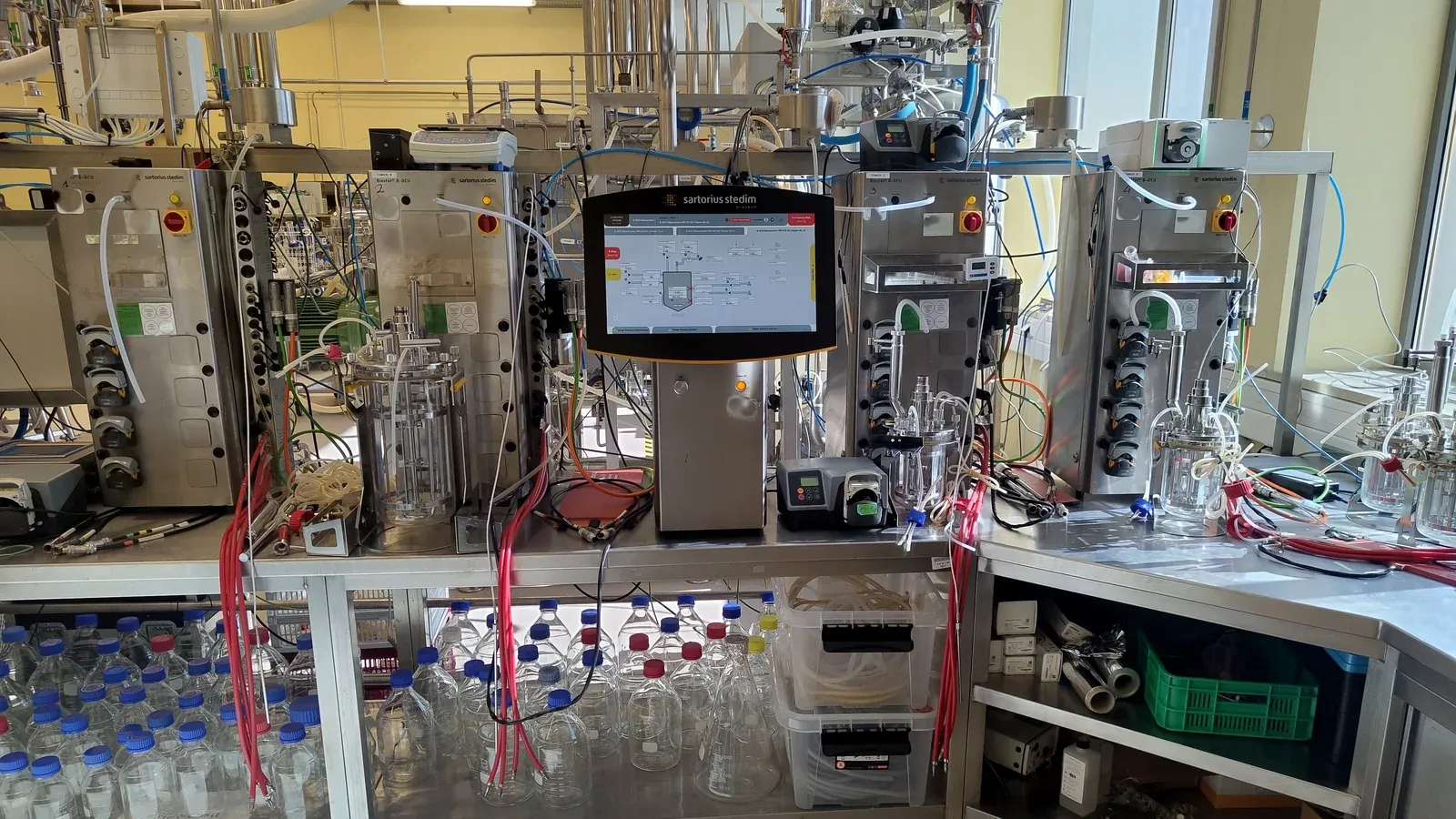
QB Control takes over the control of your Sartorius® Stedim bioreactors, glass and stainless steel alike, so you keep the vessels you trust and replace only the aging, vendor-locked control layer. It can do this because QB Control is a software-defined platform for building software-defined hardware solutions.
Executive summary
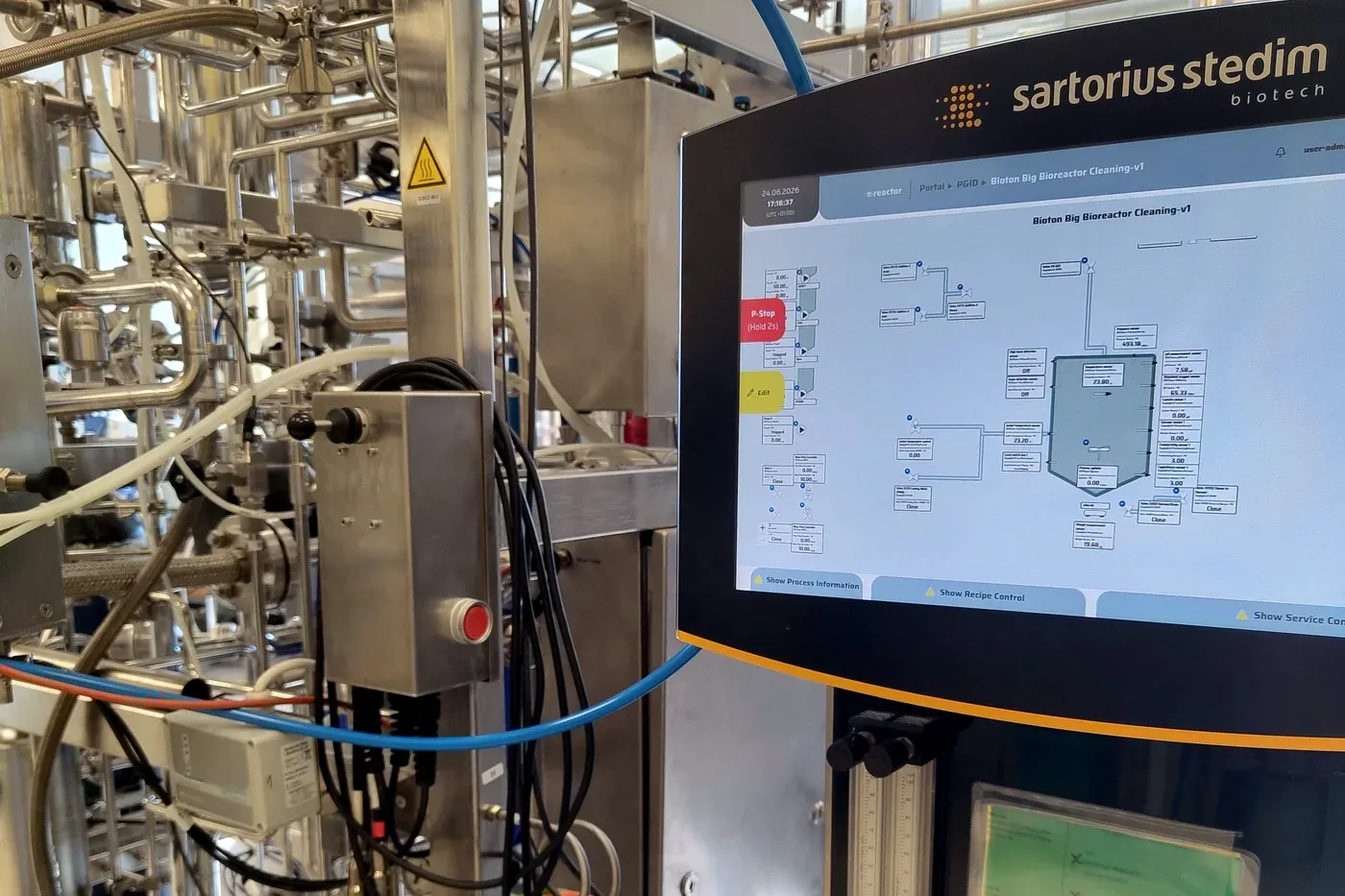
Your glass and steel rarely wear out. Your control software does. Across the industry, capable Sartorius bioreactors are tied to control systems that are being discontinued, are no longer supported, or sit behind costly license upgrades that keep you locked to a single vendor. Retrofitting with QB Control changes that. We replace the control layer (the industrial PC, the PLC, the HMI, and the probes where needed) and leave the vessels in place, and we deliver modern bioprocessing capability from day one. This is possible because QB Control is software-defined: the control logic, the hardware definition, the screens and the recipes live in software, not in rewritten PLC code. In a recent CDMO engagement we put QB Control in full control of one 70 L stainless steel Biostat D-DCU with CIP/SIP and four glass Biostat B-DCU units. The client kept every vessel, gained remote operation, role-based access, no-code recipes, plug&play hardware and parallel processing, and moved from a rented, closed system to an open architecture they own. For a decision-maker the equation is simple: lower total cost of ownership, less vendor risk, more capability, on equipment you already have.
Why this matters now
- Parts of the Sartorius stainless steel line are being wound down, so equipment that still performs is losing its support path. A working asset quietly becomes a stranded one.
- License upgrades are expensive and keep you vendor-locked. You pay to stay inside the same closed system, with no added leverage.
- Legacy control blocks modern methods. Fed-batch, perfusion, automated sampling and multiple dynamic feed lines are hard or impossible on the old stack, which caps what your facility can offer and sell.
- Every process change becomes a project. A new sensor or a new recipe often means fresh integration work and PLC re-coding, which is time and OPEX you do not need to spend.
Why any of this is possible: QB Control is software-defined
QB Control is a software-defined platform for building software-defined hardware solutions, and that single fact is what makes every point in this article possible.
Traditional bioreactor control is hard-wired. The vendor’s PLC code and firmware fix what each device does and how the process runs. Changing a pump, a probe or a control loop means re-coding the controller, and usually a fresh integration project. You are locked to the vendor, to the wiring and to the license.
QB Control works the other way around. The hardware definition, the control loops, the P&ID and HMI, the recipes and the user roles all live in software. The physical devices are described and orchestrated by configuration, not baked into fixed code.
What that means for you:
- Your existing hardware becomes a canvas. We take over the pumps, probes, valves and drives you already own and define their behaviour in software.
- Adding or swapping a device is configuration, not re-engineering. A new feed pump is plug&play, with no PLC rewrite.
- One set of hardware runs many processes. You reconfigure in software instead of starting a new integration project for each process, which is where much of the OPEX saving comes from.
- Multiple control towers collapse into one centralized controller with parallel processing.
- The screen, the recipe and the control logic are yours to change, in minutes, without programming.
A retrofit, then, is not a rebuild. It is redefining a fixed, hard-wired system as a software-defined one. That is why it is fast, and why it keeps your glass and steel exactly where they are.
What we did: a real CDMO project
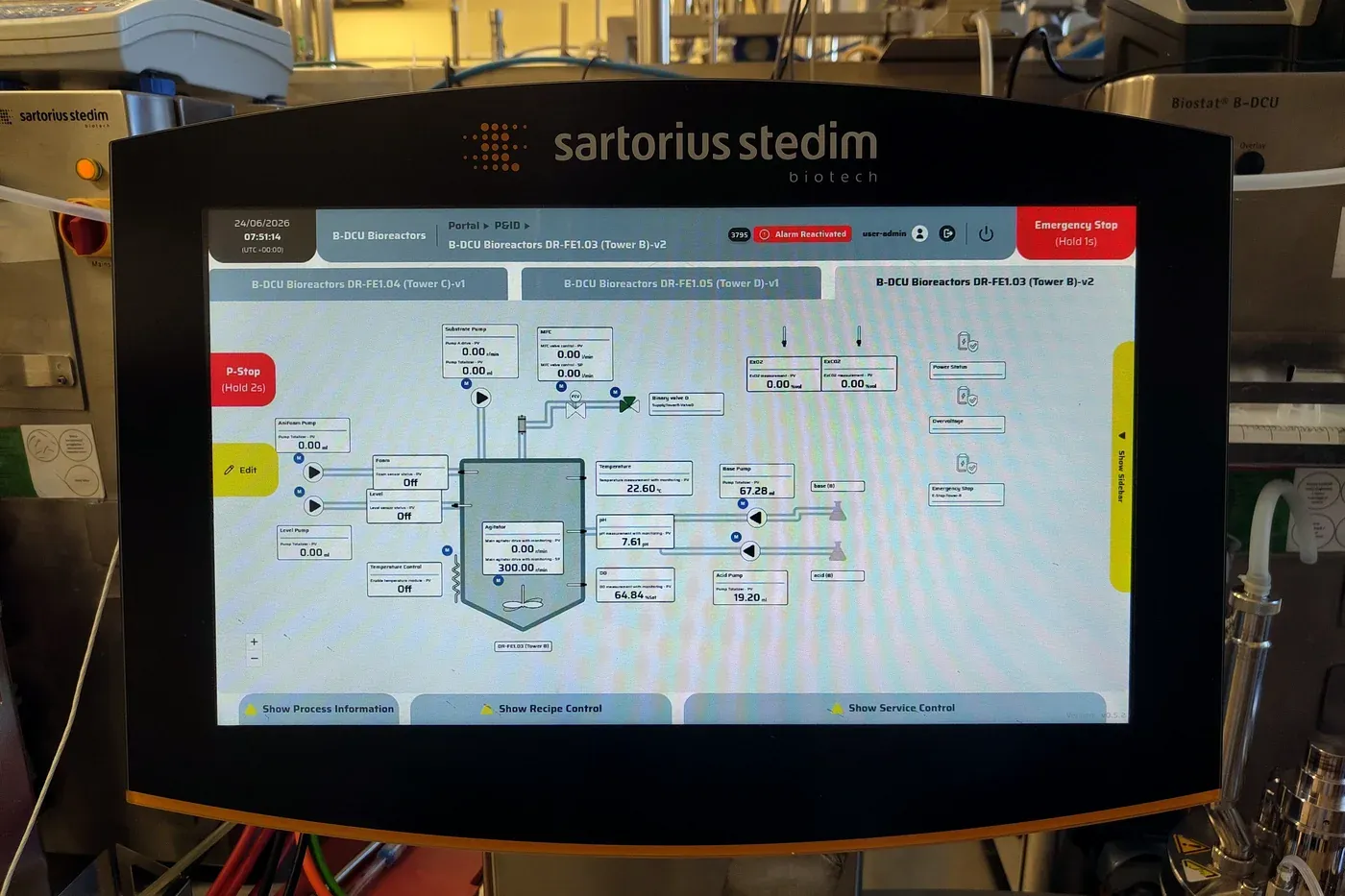
The goal was direct: have QB Control completely take over Sartorius Stedim control. We deployed it in two configurations at the same client.
- 1 x 70 L stainless steel Biostat D-DCU with CIP/SIP procedures. QB Control runs on a dedicated industrial PC that we delivered inside the existing control tower.
- 4 x glass Biostat B-DCU bioreactors. QB Control runs on our QB Edge control hardware module.
The vessels stayed in place. Only the control layer changed.
For the full engineering breakdown of a Sartorius retrofit — replacing the closed PLC, the A4BEE MTP library, the OPC-UA connector over MQTT, and sensor refurbishment — see the A4BEE case study: Sartorius bioreactors retrofit with plug-and-play control.
What the client gained, in their words
The points below are the voice of the customer from a recent review, each with its operational consequence.
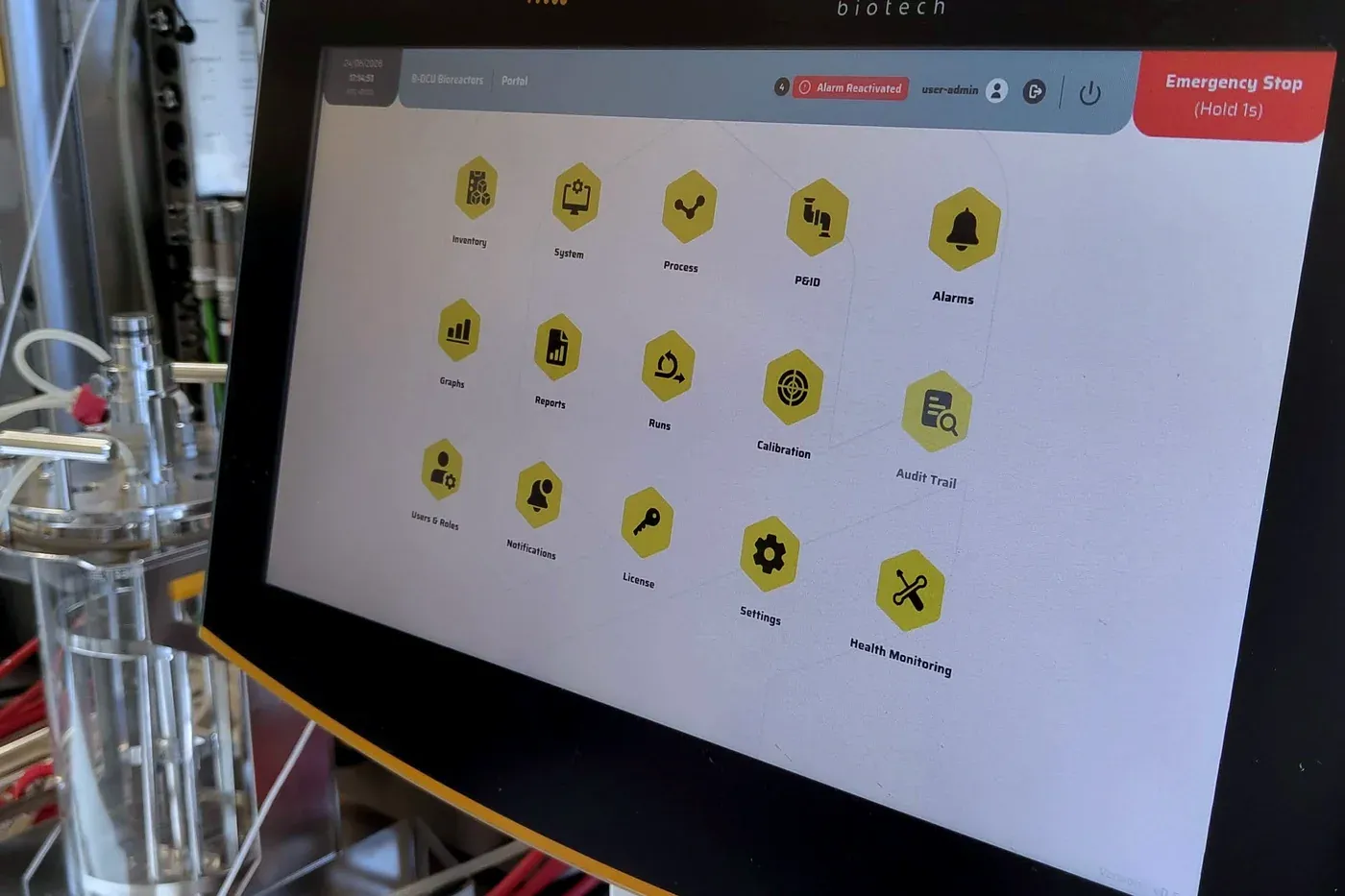
- Remote process control, so skilled people are no longer tied to an HMI panel on the floor.
- Role-based access control, so a process engineer can be given a narrow permission set to execute and oversee a run, while a senior engineer configures the process and its key parameters. That matches how a lab is actually staffed.
- No-code recipe management, with easy import and export of recipes between processes, so method changes happen in minutes without programming or an integrator.
- Plug&play equipment, so adding a feed pump does not require rewriting PLC code to support new hardware.
- Independent process control, so an issue on one process does not force you to stop the others.
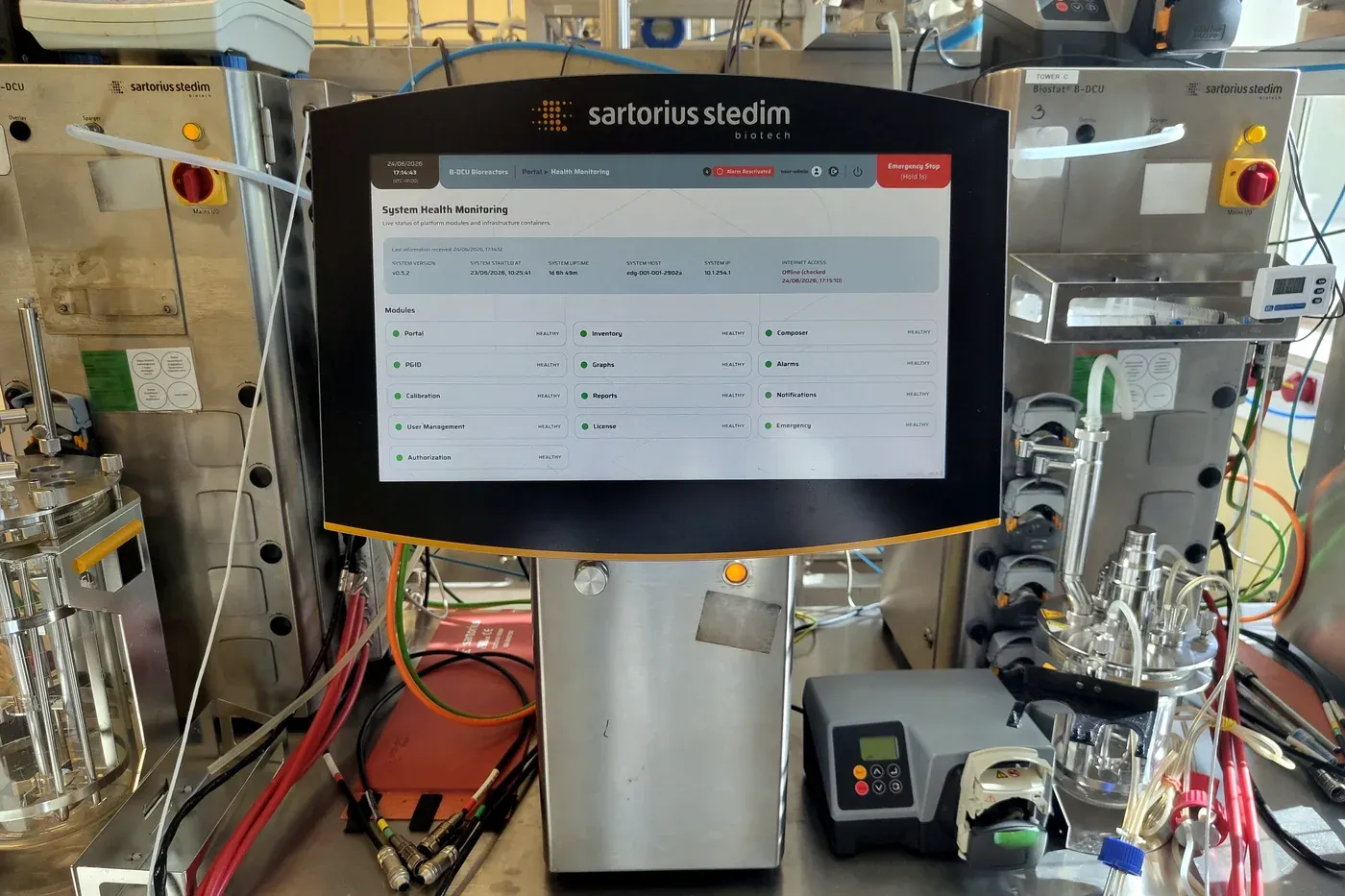
- Self-service P&ID and HMI, so the team decides what is displayed and configures it themselves in minutes, with no programming skills required.
- No limit on database size, with full data export, so you keep a complete history instead of discarding data against a cap.
- Unlimited graphing, with setpoints and process values on the same plots, annotations, and CSV export.
- A system and process contextualized audit trail, so you have full traceability of who did what, when and where.
- Remote support and service in minutes or hours, not days.
The business case
For a C-level or director, retrofitting is a cost and portfolio decision before it is a technical one.
- Give decommissioned or unsupported steel a second life. Glass and steel rarely age, the control layer is what expires, so a retrofit avoids the capital cost of a new system.
- Escape expensive license upgrades and vendor lock, and land on an open architecture you own. You convert a recurring rent into an asset.
- Use one set of hardware for many processes, reconfigured in software. Because control is software-defined, you do not start a new integration project every time the process changes, which drastically reduces OPEX.
- Consolidate multiple control towers into a single centralized controller with parallel processing, so the integration layer gets cheaper and operations get simpler.
- Turn a legacy or unsupported unit into a fed-batch or perfusion-ready setup with automated sampling and dynamic, multi-line feeding, which opens new services and new revenue.
- Eliminate the remote-desktop (RDP) and Windows infrastructure normally required for remote access, which reduces IT overhead and attack surface.
Sartorius® MFCS 4 and QB Control: strengths, weaknesses, and where each fits
We are not trying to out-Sartorius Sartorius. Sartorius® BioPAT® MFCS 4 (now Biobrain® Supervise) is a mature, GMP-proven supervisory and data-management layer for a standardized Sartorius® fleet. QB Control is a software-defined platform aimed at development, multi-vendor and retrofit lines. In a retrofit the two can coexist over OPC-UA. Here is the honest picture, framed for a lab-to-pilot context.
| Dimension | QB Control (release 6.x) | Sartorius® BioPAT® MFCS 4 / Biobrain® Supervise |
|---|---|---|
| What it is | Turnkey, software-defined platform (hardware + software) | GMP SCADA and data-management software layer |
| Add or swap a pump or probe | Done in software, dragged onto the P&ID, no PLC code | Typically touches the DCU/PLC, OPC tags and SCADA config |
| P&ID and HMI | Auto-generated, user-editable in minutes | Engineered SCADA screens |
| In-run recipe or parameter change | Supported during the run | Pre-run ISA-88 recipes plus supervisory setpoints; in-run modification not clearly documented publicly |
| Vendor scope | Vendor-neutral (Hamilton, Mettler Toledo, Levitronix, any bioreactor over OPC-UA) | Sartorius-centric, others via OPC |
| Remote access | Any browser, per-user roles, unlimited users | Windows clients via RDP (per-client, up to ~30) |
| IT footprint | Browser-based, no external database | Windows Server plus Microsoft SQL Server |
| Deployment time | Days (auto-discovery) | Weeks to months (install, configure, validate) |
| Licensing | Perpetual, all-inclusive | Base plus per-module plus per-client plus services |
| Electronic signatures (21 CFR Part 11) | On the roadmap, not yet released | Available today |
| Enterprise historian, up to 32 units, MVDA/DoE | Lab-to-pilot, exports to your historian | Purpose-built |
| Native Biostat® and ambr® fleet historization | Via OPC-UA | Deep and native |
Where QB Control is stronger for a retrofit or development line:
- Changes live in software, not PLC code, so a scientist swaps a pump or adds a probe from the P&ID without a controls engineer.
- The P&ID and screens are auto-generated and user-editable in minutes, so your team owns the process view.
- Recipes and services can change during a run, so you iterate without aborting the batch.
- It is turnkey and vendor-neutral, so one system runs mixed bioreactor and sensor brands.
- It carries a lighter IT footprint and a lower lab-to-pilot cost of ownership: browser-based, no SQL estate, no per-client seats, deployed in days.
- It integrates openly over OPC-UA (including an embedded OPC UA server), MQTT, REST and SQL, so your MES or historian can read from it.
Where Sartorius® MFCS 4 is genuinely stronger:
- Electronic signatures under 21 CFR Part 11 are available today. On QB Control they are roadmapped, not yet released.
- Deep native integration with the Sartorius® Biostat® and ambr® fleet, including cross-scale historization.
- Enterprise historian and scale, up to 32 process units, with SQL historization, replication and high availability.
- Built-in MVDA and DoE multivariate analytics and design-of-experiments.
- Formal ISA-88 recipe control with formula management, backed by a long pharma pedigree and mature validation services.
How we position it. For signature-bound GMP production on a standardized Sartorius® fleet, keep MFCS 4. For development, multi-vendor and retrofit lines where speed and software flexibility matter, QB Control fits, and the two bridge over OPC-UA, with QB Control able to expose an embedded OPC UA server so your historian or MES reads from it directly. A retrofit does not force an either/or decision.
What a retrofit involves, so you know what you are buying
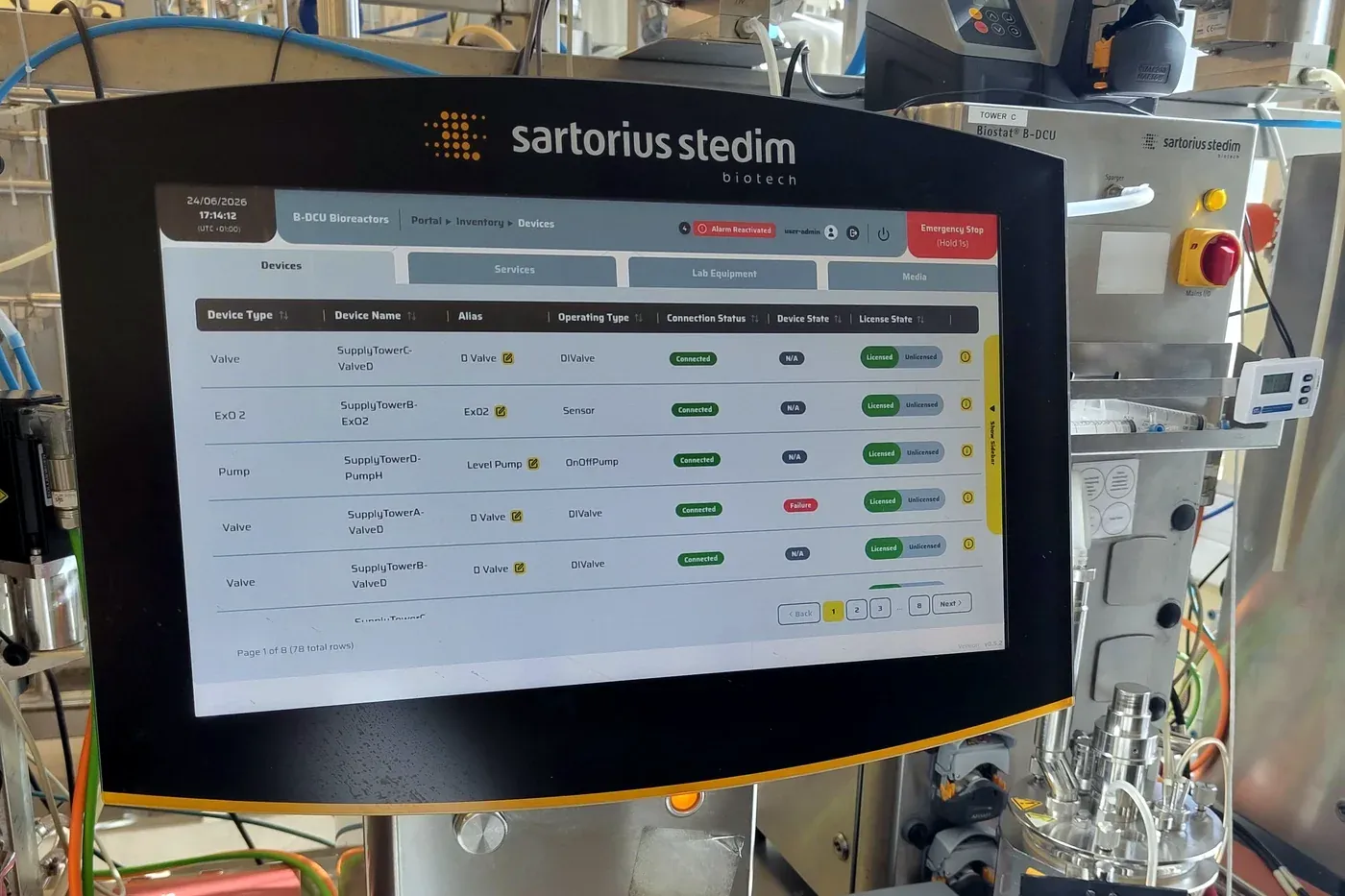
- Steel and glass stay. We replace the industrial PC (with a new IPC or QB Edge), replace the PLC, and revamp screen connectivity.
- Analog probes and sensors are moved to digital Hamilton probes. This can require cable modifications or new probes.
- IP addressing is reconfigured to support remote access, and we run an inventory review and assessment.
- You provide the Sartorius documentation (diagrams, wiring, control-loop descriptions), your process understanding, the testing scenarios and the setpoints. We either take the platform to A4BEE, or bring our team to your site.
For the step-by-step technical version (probes, QB Edge, OPC-UA and MQTT, validation), see How to Retrofit a Legacy Bioreactor to OPC-UA and MQTT with QB Control.
Before you decide: straight talk
- Retrofitting voids the vendor warranty. That is the nature of the change, and we say it plainly.
- Not every activity can be rolled back quickly. A rollback plan is priced separately, as an option, and is never assumed inside an estimate.
- Our commitment is clear: at minimum the same capabilities you use today, with control loops at the same or better operational level, and new capabilities available from day one after the project.
The bottom line
If you run Sartorius, or any other PLC-based bioreactor, and you are facing a discontinuation notice, a license renewal, or a capability wall, retrofitting is usually the faster and cheaper route to a modern, open system, on the vessels you already trust. Because QB Control is software-defined, that modern system is one you can keep redefining as your processes change, without starting over each time. Tell us your control loops, feed lines and testing scenarios, and we will come back with a concrete retrofit plan and price for your fleet.
Notes, disclaimer and sources
The comparison above is between QB Control (release 6.x, per the current release notes) and Sartorius® BioPAT® MFCS 4 / Biobrain® Supervise (per public datasheets, 2025 to 2026). It is based on publicly available data gathered in July 2026. Product features, pricing and terms are subject to change by the respective manufacturers, and a later release may add or change capabilities described here. Where a competitor capability could not be verified from public sources, it is described as such (for example, in-run modification of recipe parameters).
All trademarks, logos and brand names are the property of their respective owners and are used here for identification and comparison only, without implying endorsement or affiliation. Sartorius®, BioPAT®, Biobrain®, Biostat® and ambr® are registered trademarks of Sartorius AG. QB Control and QB Systems are brands of A4BEE Sp. z o.o.
Transparency note: this article is published by A4BEE Sp. z o.o., the creators of QB Systems and QB Control, to show how our product differs from other options based on objective, verifiable features. It is provided for information only, and any decision made on its basis is at the reader’s own risk.
Public sources:
- Sartorius, Biobrain® Supervise (BioPAT® MFCS) product page: https://www.sartorius.com/en/products/process-analytical-technology/process-control-automation/biobrain-supervise
- Sartorius, Biobrain® Supervise software features datasheet (DIR 2624182, 2025): https://www.sartorius.com/download/1304476/biopat-mfcs-datasheet-en-b-2624182-sartorius-pdf-data.pdf
- Sartorius, Biobrain® Supervise brochure (SBI1519-e, 2026): https://www.sartorius.com/download/518648/biopat-mfcs-brochure-en-b-sbi1519-sartorius-data.pdf
- Sartorius, BioPAT® MFCS ANSI-88 compliant batch control datasheet: https://www.sartorius.com/download/1304480/biopat-mfcs-ansi-88-datasheet-en-b-2651540-sartorius-pdf-data.pdf
A4BEE Sp. z o.o. · QB Systems · Flexible. Innovative. Limitless.